


A Concrete Commitment to Watershed Protection in Southeast Asia
This marks a key milestone for river biodiversity preservation in Southeast Asia. On Tuesday 15 September, the signing ceremony held in Kuala Lumpur officially launched the Tiram River restoration project. This 33.5 km waterway—a strategic tributary of the Johor River situated on the border between Malaysia and Singapore—faces major environmental challenges, including water pollution and bank erosion.
The project is led by the Global Environment Centre (GEC), a Malaysian NGO widely recognized across the ASEAN region for its expertise in integrated watershed management, and jointly supported by the Veolia Foundation and the Wilo-Foundation.
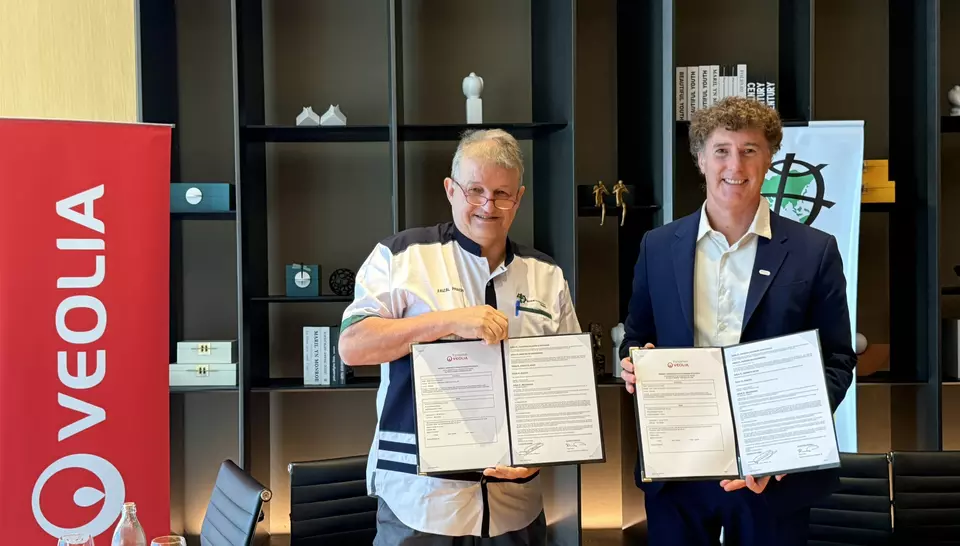
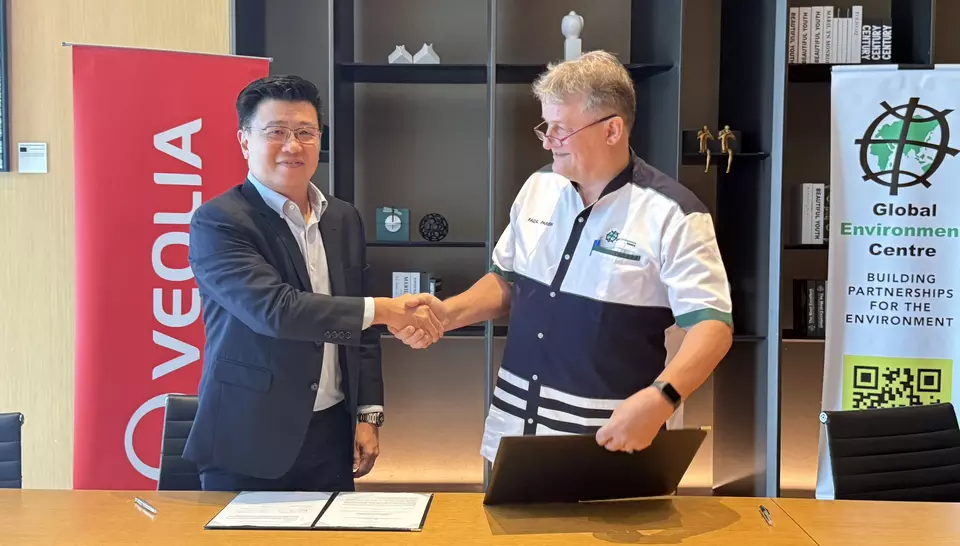
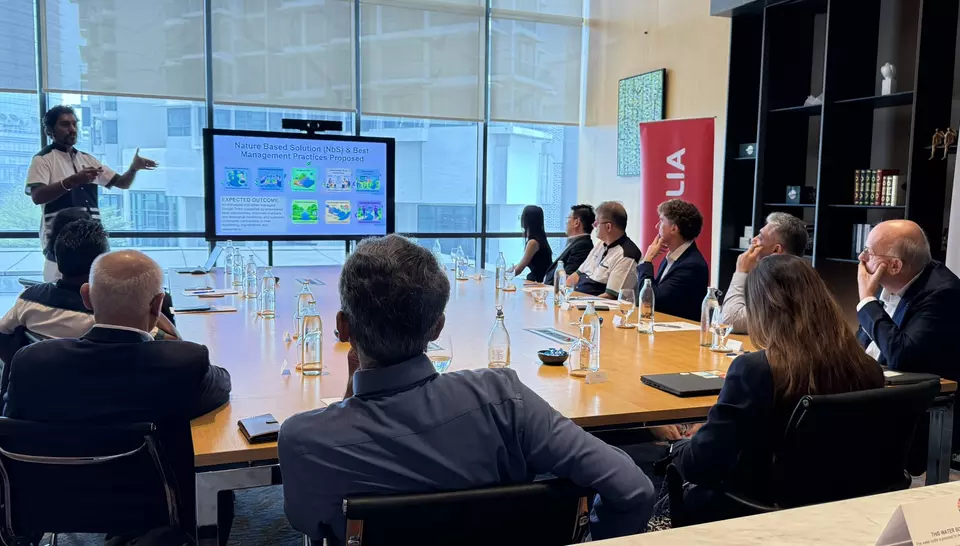
On Tuesday 15 September in Kuala Lumpur, the Veolia Foundation, the Wilo Foundation and the Global Environment Centre (GEC) finalized their partnership during an official signing ceremony.
This three-year project aims to rehabilitate the ecosystem of the Tiram River by combining Nature-based Solutions (NbS), strong community engagement, and skills-based sponsorship from Veolia employees.
Nature-Based Solutions and Local Empowerment
- Ecological Rehabilitation: Implementation of initiatives with local communities and educational institutions, focusing on river monitoring and cleanup activities along selected river stretches, as well as planting activities to help control riverbank erosion.
- Education and Awareness: Empower communities and capacity building through educational activities, to foster community ownership of ongoing river monitoring efforts and help the local to reconnect with their natural heritage.
The program adopts a holistic strategy that pairs ecological engineering with community ownership:

The Power of Skills-Based Sponsorship
In line with the Veolia Foundation's core mission, this initiative relies heavily on field-level involvement. Through the Veoliaforce network, Veolia employees from Malaysia and Singapore will contribute their technical expertise. They will actively participate alongside residents in water quality monitoring and ecological restoration tasks.
The ultimate goal is to equip local communities with the necessary tools and knowledge to independently manage and safeguard their river in the long run.