


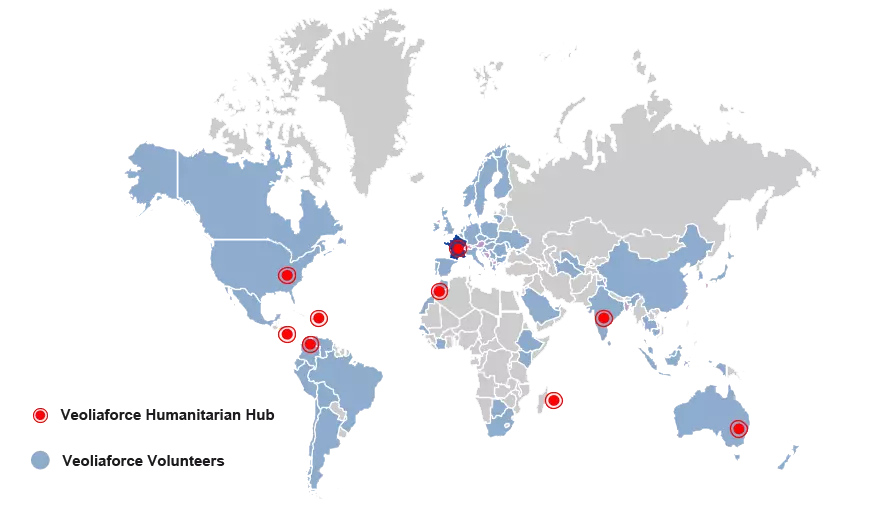
These strategic footholds, distributed across the Group’s main geographic regions, bring technical expertise and emergency equipment closer to vulnerable areas.
How? Each Veoliaforce hub relies on both human and material resources in partnership with local teams:
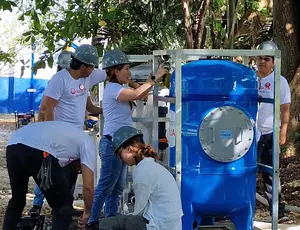
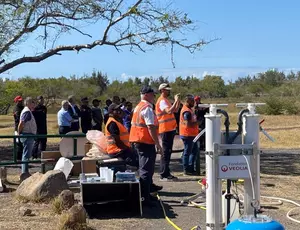
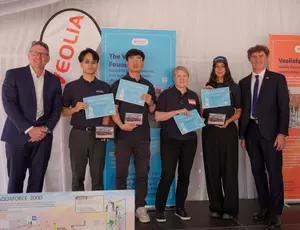
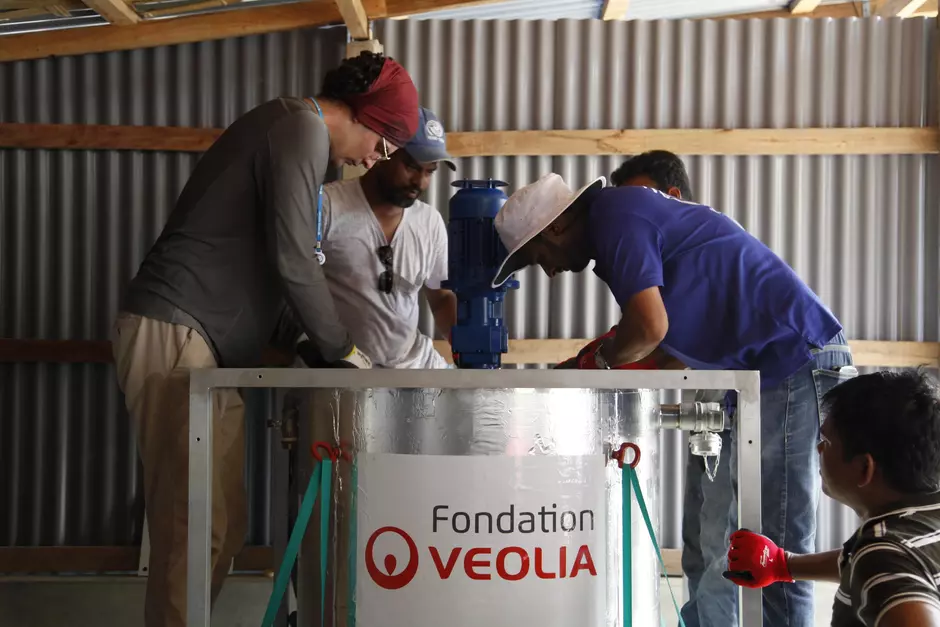
- Veoliaforce volunteers, who are Veolia employees placing their expertise at the Foundation's disposal during working hours, trained for humanitarian response.
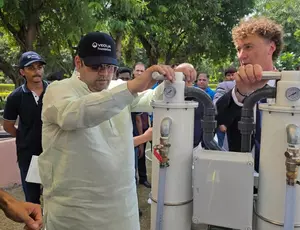
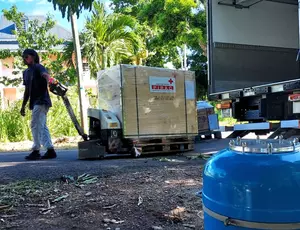
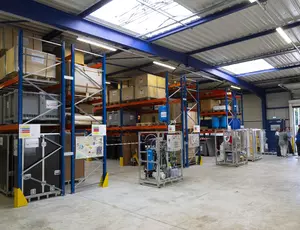
Mobile water treatment units, known as Aquaforces (capable of supplying 2,000 to 7,500 people per unit), prepositioned in strategic transport hubs to reduce response times during the critical first hours of a disaster.
By relying on these regional hubs, the Veolia Foundation ensures a capacity for action that is closer to the field, more responsive, more consistent, and more sustainable.
In response to the multiplication and increasing severity of humanitarian, ecological, and climate crises,
the Veolia Foundation is evolving its intervention model.
Humanitarian response is now decentralized through a newly formed network of regional operational hubs.
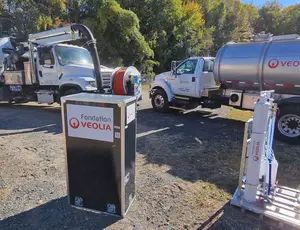
The Veolia Foundation has developed solutions for access to essential services.
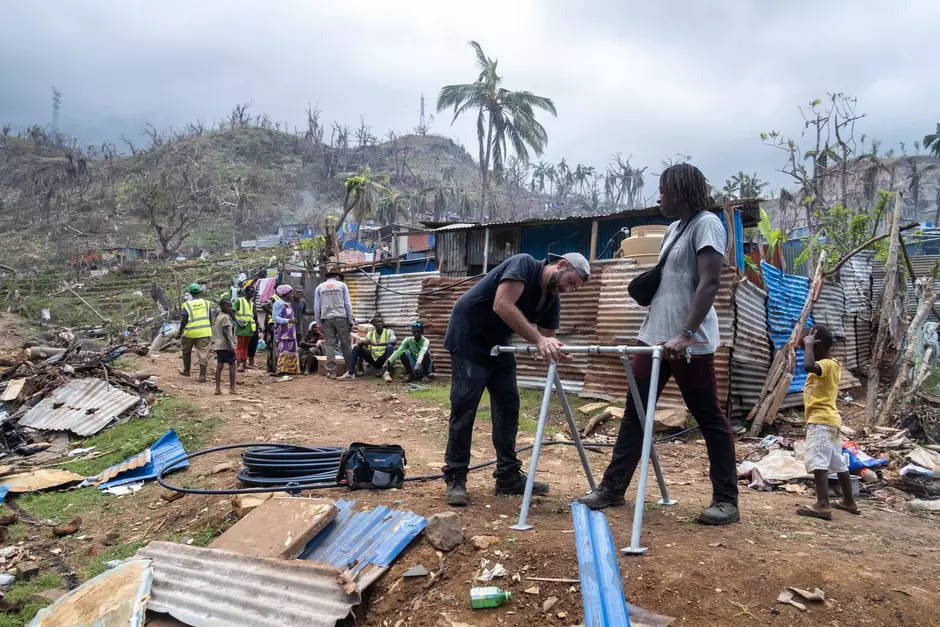
Following a “copy & adapt” approach applied to Veolia technologies, the Foundation designed mobile water treatment units (Aquaforces), a sanitation device (Saniforce), and other equipment adapted to humanitarian contexts.
The Veolia Foundation relies on humanitarian
partners.
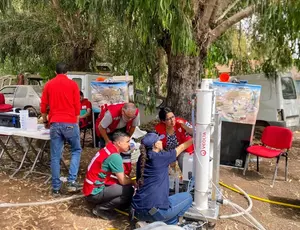
Veoliaforce hubs operate in close synergy with international and local humanitarian ecosystems. Whether working with United Nations agencies (UNICEF, UNHCR), the Red Cross, or partner NGOs, the approach is coordinated, unified, and tailored to the needs expressed by relief actors on the ground.
―
Turning global expertise
into local impact:
Discover the humanitarian hubs
AND THE VEOLIA TEAMS BEHIND THEM

How are these Veoliaforce hubs driven?
Through skills-based sponsorship, in partnership with Veolia teams.
With specialized equipment developed by the Veolia Foundation.