

Humanitaran Aid & Development
- Location:
Bénin - Sponsor:
Thierry Vandevelde - Grant:
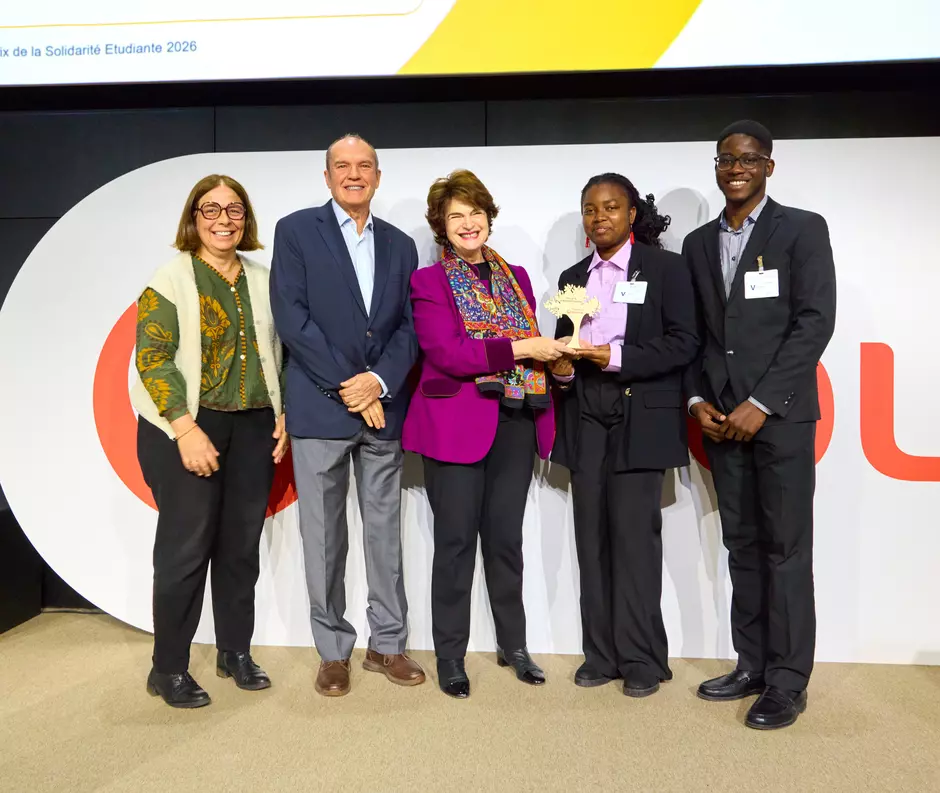
€5,000 requested under the 2026 Student Solidarity Award
Project Leader
In Benin, numerous orphanages operate under severe food insecurity, lacking consistent access to fresh vegetables and quality proteins.
The Avenir Vert Solidaire (AVS) association, led by PhD candidates and students from Aix-Marseille University, Institut Agro Montpellier, and the University of Abomey-Calavi, is deploying a sustainable and innovative solution: aquaponics. This closed-loop farming system combines fish farming with hydroponic vegetable cultivation to break dependency on unpredictable external donations while offering practical environmental education.
Overcoming infrastructure failures through solar power
Following a successful 2025 pilot phase that brought self-sufficiency to a first facility, the association is consolidating its model in a second orphanage caring for 73 children (Demeure d'Amour in Zè). Although the aquaponic systems are already in place, frequent water supply disruptions and power grid failures previously caused fish mortality by breaking the circuit's biological balance. Funding from the Veolia Foundation supports a dedicated water borehole and a continuous solar-powered pumping system, turning the facility into a resilient, low-cost technical model.
A circular production and educational model
The initiative relies on an interconnected triangle: 70% of the food produced across two orphanages (Bergerie de Dieu and Demeure d’Amour) goes directly to the children's meals, while 30% is sold to ensure financial sustainability.
Concurrently, a school-farm established in a local school educates 300 students using crops sold to fund operations. To build long-term sustainable habits, AVS volunteers use internally designed educational tools, including comic books and activity logs, turning the children into active managers of their own food supply.