


Five months after their training in Cartagena, Colombia, Veoliaforce volunteers from Latin America are providing emergency humanitarian relief following the 7.4-magnitude earthquake that struck the country. Working in close coordination with the Veolia Foundation's humanitarian partners, they are supplying drinking water to affected communities.
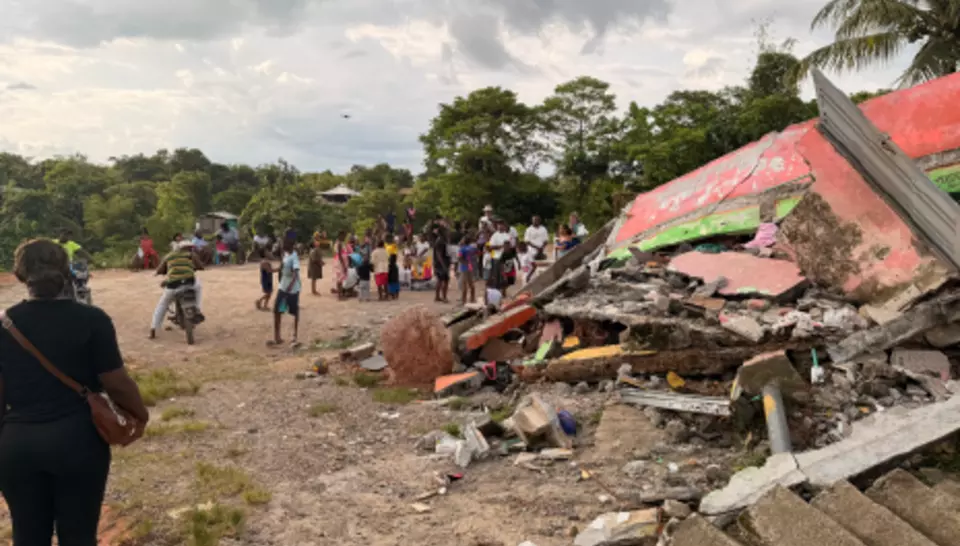
On August 10, 2026, a violent 7.4-magnitude earthquake devastated the area of San José del Palmar in the Chocó department. It is the most powerful seismic event recorded in Colombia in a decade. Extensive infrastructure damage and power outages across some fifteen towns completely paralyzed pumping stations and water distribution networks.
Five Veoliaforce experts and two Aquaforce units deployed
As early as August 14, Veoliaforce expert Yann Dhellemmes was deployed by the Veolia Foundation to assess the situation alongside Action Against Hunger (ACF). This reconnaissance mission conducted around Quibdó identified the population's priority needs and validated the deployment of two emergency water treatment plants: an Aquaforce 2000 and an Aquaforce 7500.
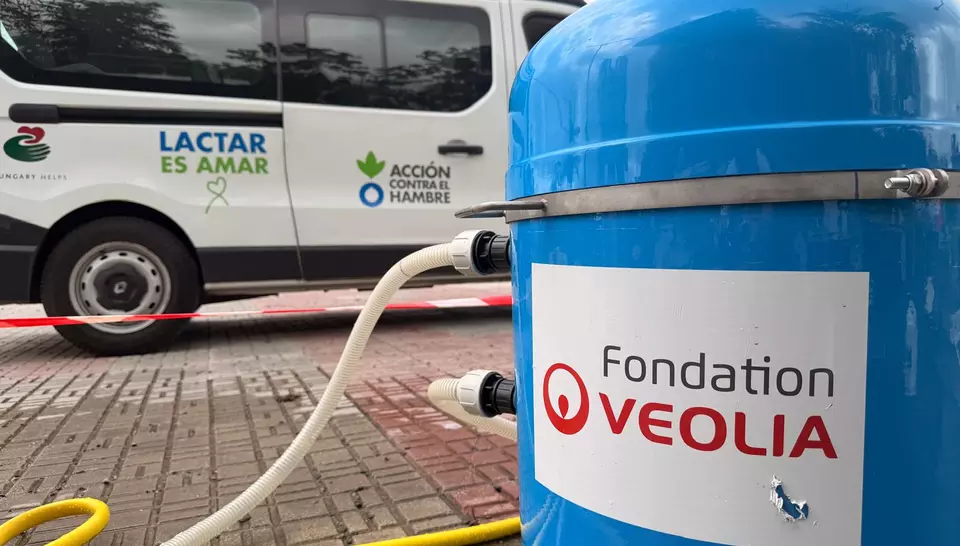
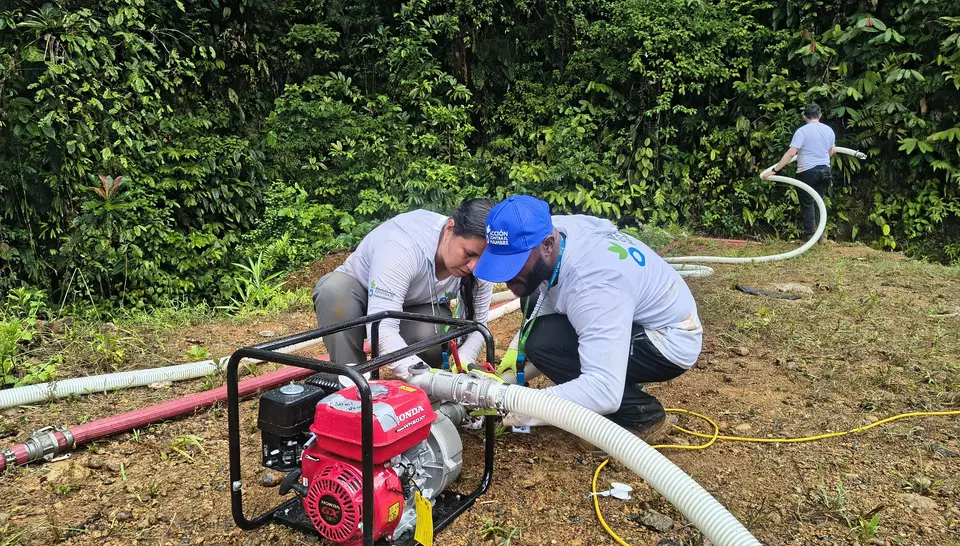
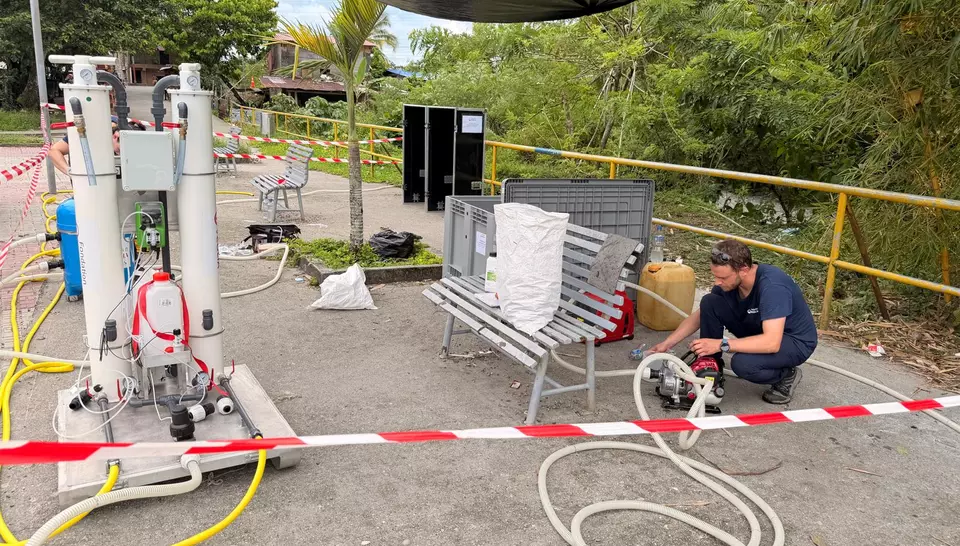
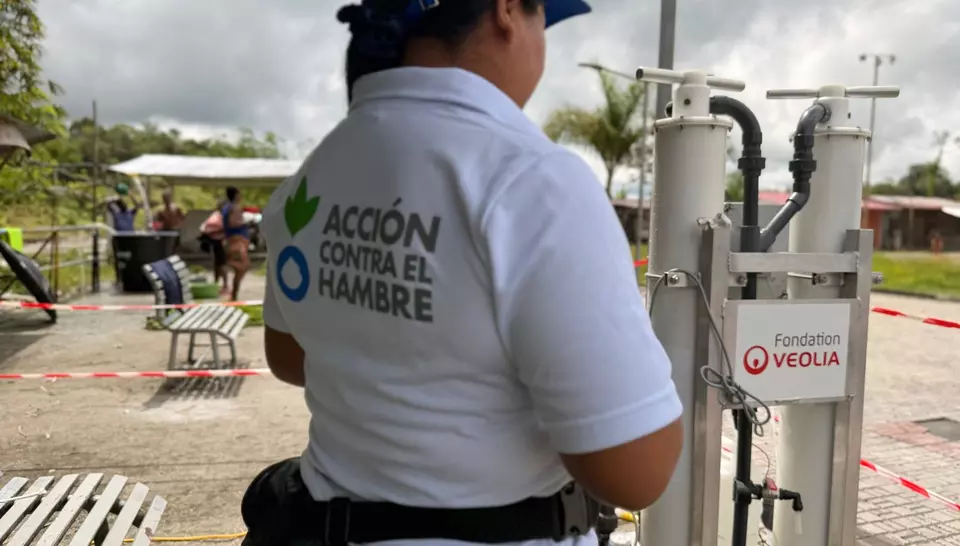
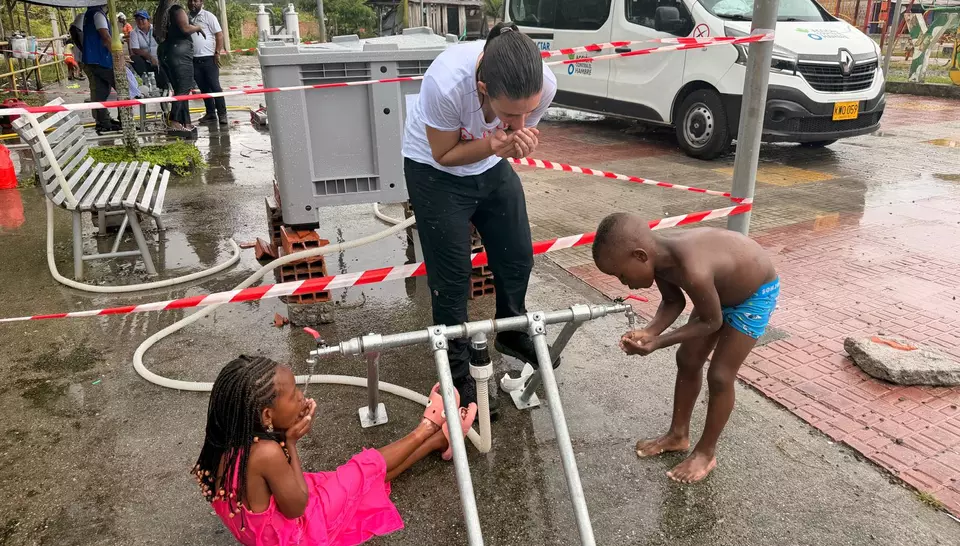
These mobile water treatment units had been pre-positioned in Colombia back in March 2026 during the launch of the first Veoliaforce LATAM hub. The Veolia Foundation’s regional humanitarian response platform relies on pre-positioned equipment and Veoliaforce volunteers—Veolia employees working through skills-based sponsorship. Around thirty of them were trained in March to carry out emergency missions alongside local humanitarian partners.
Pamela Escobar, José Andrés Sierra, Bryan Baldión, and Ingrid Paz Adema Yusta, drawn from Veolia’s Colombian and Chilean teams, have been working on the ground since August 23 to produce drinking water for disaster-stricken communities. The team is managing the commissioning and monitoring of water production across two key sites: Nóvita—a town of 4,000 residents,a town of approximately 4,000 inhabitants located one hour south of Istmina, where an Aquaforce 7500 has been producing drinking water since August 26—and Unión Panamericana a village of around 1,500 people where an Aquaforce 2000 has been deployed.
On September 6, Daniela Nascimento from Veolia’s Brazilian teams and Eberto Lopez Diaz from Colombia joined the Veoliaforce volunteers already on site to train local operators in drinking water production.
Close synergy with emergency response partners
Daily operational exchanges are maintained with Action Against Hunger (ACF), which is leading the humanitarian response in the affected area. Coordination also continues with the Colombian Red Cross, UNICEF, which supplied distribution equipment, and the World Food Programme (WFP), which facilitated the transportation of the water purification units to Quibdó on August 22.