

Environment and Biodiversity
Location: Germany (Neisse River)
Sponsor: Boris Lesjean
Grant: €40,000 (Selection Committee of 10/06/2025)
Project Leader: Wasser 3.0 gGmbH
In Germany, microplastic pollution represents a major challenge for the quality of cross-border river systems. Alongside Wasser 3.0 gGmbH, the Veolia Foundation is supporting the Neisse Total project, an initiative that combines artificial intelligence and citizen science to map and validate a new standard for pollutant detection across the 256 km of the Neisse River.
A Breakthrough Innovation for Water Health
Wasser 3.0 gGmbH is an international solidarity NGO specializing in the research and development of solutions for detecting and removing microplastics and micropollutants. Based on a circular economy strategy, it transforms extracted plastic residues into construction materials, thereby closing the water cycle loop. With over 15 successful feasibility studies, Wasser 3.0 has established itself as a key player in ecological innovation, aligned with the United Nations Sustainable Development Goals.
Neisse Total: Artificial Intelligence at the Core
The NEISSE TOTAL project is revolutionizing European water monitoring by combining AI-assisted fluorescence analysis with a cross-border "Citizen Science" approach. The objective is three-pronged:
Optimize particle detection through machine learning.
Create a complete mapping of the 256 km of the Neisse River (involving Germany, Poland, and the Czech Republic).
Scientifically validate this new methodology against current standards.
The Veolia Foundation specifically finances the acquisition and installation of technical equipment, such as advanced sensors.
Toward a European Monitoring Standard
The culmination of this project will allow for the precise identification of microplastic accumulation zones ("hotspots") to better direct depollution efforts. By involving local schools and NGOs in the collection of 80 measurement points, the project also raises citizen awareness regarding water quality issues. This two-year program lays the groundwork for European standardization for rapid, accurate, and economically viable environmental monitoring.
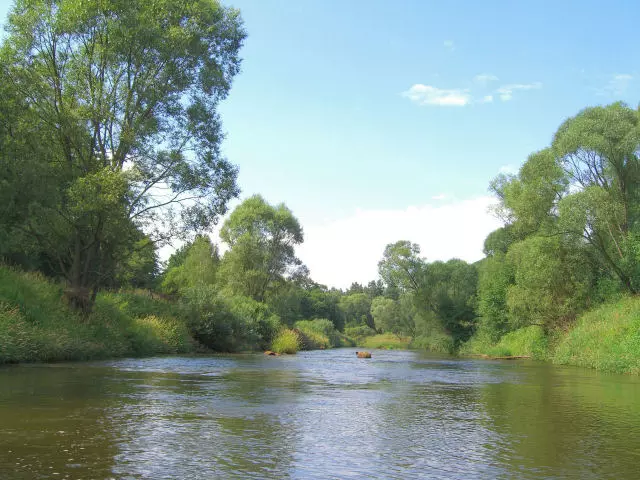
© Kuzka, CC BY-SA 2.0 DE, via Wikimedia Commons