


The Veoliaforce volunteer
is a Veolia employee made available to the Foundation to share their skills with a partner organization.
Read stories from several of them:
Guy de Sainte Claire: "Today, the system run by Dinepa is considered the most efficient and sophisticated in Haiti."
"Today, the system run by Dinepa is considered the most efficient and sophisticated in Haiti."
Guy de Sainte Claire first set out for Haiti as a volunteer in March 2010. Two months after the earthquake that ravaged the island, his diagnosis laid the foundation for the rebuilding of the water system in Petit-Goâve. The master plan for rehabilitation became the backbone of the two-year program. Three months after the system's inauguration, we take a look at the project with a volunteer and sponsor who is almost surprised at how well it has all turned out.
You were in Haiti for two weeks after the earthquake that ravaged the island in January 2010. What prompted you to become a Veoliaforce volunteer?
I became interested in the Veolia Environnement Foundation's response after the tsunami that struck southeast Asia at the end of 2004.
Like all of the company's employees, I was aware of the many things being done on the ground, and I went to the Foundation's website to apply to be a volunteer.
A year later, I took Veoliaforce training, and, then, one day in March 2010, I received a call from Franck Haaser, the Foundation's Emergency Director. He proposed that I leave for Haiti that very week!
As a result of your first assignment in Haiti, you suggested a way of rebuilding the water supply system in Petit-Goâve. Less than two years later, the system was inaugurated. How did you feel at the end of the project?
I was very proud! To be honest, I didn't think that we would manage to do it so quickly. The system was rebuilt according to European requirements, in other words, to last a long time. The materials are particularly robust and we factored in the risk of another earthquake. So the pipes have express joints that won't come apart if another earthquake occurs.
You were there again for 10 days last November to optimize the system's chlorination and prepare a report on the program.
That's right, and although we were surprised by the excellent quality of the water at Petit-Goâve, we had a few disappointments when it came to the system's operation. We modified the reservoir's hydraulics and erected an additional building for operations. We also replaced the pipe leading to the three new valve chambers. But, beyond this, water is being carried to consumers by the old distribution network, which is a mess. Haitians connect to the system illegally to wash their dishes and clothes, and the network sucks up the dirty water. You can imagine the nightmare!
How can this type of behavior be stopped?
By raising awareness and education. We explain and explain, keep repeating the message and little by little a sort of self-regulation takes hold.
The person living on the next street understands that if there's no drinking water today, but she had some yesterday, it must mean that there's a problem higher up in the system. For this, we found powerful allies in the people at Haiti's water and sanitation department, Dinepa. The local team is very concerned, since it has been behind the project from the beginning.
The program also had a "training" aspect broad enough that, eventually, Dinepa would be able to maintain the system. How did that go?
Dinepa now has new offices and one of the annexes is a warehouse where parts, drills and anything else needed to maintain the system are stored. Personnel have been taught how to detect leaks and are determined to maintain the current level of service. The system they are running is considered the most efficient and sophisticated in Haiti. In Petit-Goâve, Dinepa's employees are the only people on the island to have flow-based chlorine regulation and to know how to set the amount of chlorine in the water. And those are good reasons for being proud!
What do you think this system will be like in a few years?
When we came here two years ago, we felt that the facilities left behind by the Americans decades before were in pretty good shape. And when we left in November, Sébastien Renou, my opposite number in the French Red Cross, and I agreed that in 50 or 80 years, others might well be saying, "Those French, they really did a good job!" In a nutshell, we left behind a Rolls Royce that the Haitians have the key for and know how to drive.
MORE ABOUT THE PROJECT SUPPORTED
> Haïti, janvier 2010
Jean-Marc Loubet : "Jusqu'alors, je n'étais parti à l'étranger que pour aller en Espagne, vous imaginez le bouleversement !"
Jean-Marc Loubet est conducteur de station à l'agence du Grand Toulouse. Aux côtés de l'association Les Enfants du Ndé, il accompagne depuis 2006 un projet d'adduction d'eau potable à Bangoua, au Cameroun. Son engouement pour les projets de développement l'a conduit à partir plusieurs fois en mission sur le terrain.« Jusqu'alors, je n'étais parti à l'étranger que pour aller en Espagne, vous imaginez le bouleversement ! »
Quelle est la situation à Bangoua ?
La partie technique est, pour l'essentiel, achevée. Forages, stations de traitement des eaux, bornes fontaines, branchements... Le réseau fonctionne mais les rendements ne sont pas très bons. Non pas qu'il y ait des fuites mais on soupçonne de très nombreux branchements sauvages. Mon objectif lors de cette mission était donc principalement de mettre en place un suivi local pour sensibiliser les populations : on veut faire passer le message qu'il y va de l'intérêt de tous de ne pas se brancher clandestinement sur le réseau.
Vous avez donc trouvé des relais sur place pour mener cette campagne de sensibilisation ?
Oui, Era Cameroun, une ONG locale, déjà engagée dans d'autres projets de développement au Cameroun. Elle est chargée de suivre l'organisation du travail du comité de gestion.
Le comité de gestion... ?
Il réunit le chef supérieur du village, les personnels techniques, de gestion, etc. Il préfigure une organisation locale de service des eaux. D'autant qu'à terme, on pourrait envisager d'accroître les volumes d'eau. Auparavant, le village était alimenté par trois châteaux d'eau et huit forages ; aujourd'hui, il n'y a plus que deux forages. Mais on augmentera les volumes que lorsqu'on aura gagné en rendement.
Envisagez-vous de repartir ?
Je suis toujours partant ! Mais le départ d'un volontaire reste un investissement important pour le Groupe. Sans compter les collègues qui prennent en charge mon travail quand je ne suis pas là. J'en profite d'ailleurs pour les remercier ainsi que toute ma hiérarchie qui me permet de vivre des moments très riches en expériences humaines.
Comment êtes-vous devenu volontaire de la fondation Veolia ?
La première fois que j'ai entendu parler de Veoliaforce (depuis intégrée à la fondation Veolia, ndlr), c'était après le génocide au Rwanda. On en discutait entre collègues, en se demandant tout simplement comment on pouvait aider, d'une manière ou d'une autre. Mais à l'époque, le Rwanda faisait peur et mon épouse n'était pas favorable à un tel départ. Je n'ai donc adressé mon CV à la Fondation qu'en janvier 2005, après le Tsunami asiatique. Six mois plus tard, j'étais envoyé sous l'égide de la Croix-Rouge sur l'île de Sumatra (Indonésie) pendant 18 jours. Jusqu'alors, je n'étais parti à l'étranger que pour aller en Espagne, vous imaginez le bouleversement ! En 2006, j'ai suivi un stage de formation, notamment une intervention passionnante sur l'Afrique. Cela m'a donné envie d'y partir et de m'orienter davantage vers le développement. J'avais été un peu frustré de ne pas pouvoir suivre ce que nous nous avions fait en Indonésie, mais c'est le propre d'une mission d'urgence !
EN SAVOIR PLUS SUR LE PROJET SOUTENU
> Les enfant de Ndé
Réhabilitation du réseau d'eau potable de la ville de Bangoua et formation des habitants à la gestion de l'eau
Pascal Merland: "Everybody is focused on the essential objective: to provide sustainable support to a population in danger."
« Everybody is focused on the essential objective: to provide sustainable support to a population in danger. »
Pascal Merland and Pierre-Yves Cailleton, Veoliaforce volunteers from Veolia Environmental Services, went to Nigeria for two weeks to support American NGO the Blacksmith Institute, appointed by UNICEF to decontaminate local villages.
You went to Nigeria for two weeks as part of an extensive lead poisoning prevention program. What was the situation on the ground?
So far, eight villages have been confirmed as contaminated. Two were decontaminated at the beginning of the summer, five are currently being worked on and one remains. The pollution was caused by recent mining of local rock that contains small traces of gold but also large quantities of lead. When performed without care, this gold mining carries risks. The ore is brought back to the village by the men to be ground down to a fine powder by the women and children. The lead dust that is released and widely distributed is a danger both to the environment and to human health. When inhaled or ingested it causes lead poisoning. All the children tested are showing abnormally high levels of lead in the blood. They are the biggest victims of this pollution: in some of these villages, 20% to 30% of children under the age of five have died in the last six months.
UNICEF is already present on the ground, isn't it?
It was UNICEF that appointed the Blacksmith Institute, an American NGO that monitors the most polluted sites on the planet for the United Nations. It was in this context that the Veolia Environnement Foundation was invited to contribute to the program, and with a very precise objective: to ensure the best use of UNICEF funds on the ground by optimizing the solutions deployed. Pierre-Yves Cailleton and I therefore went to the region to audit the processes. Practically speaking, the decontamination consists of isolating the polluted topsoil. The waste management process must prevent any renewed contamination from occurring in the next few years.
How is this hazardous waste usually treated?
It should be stored in compliance with local regulations and following risk and impact studies. The Zamfara, however, have no laws covering this issue and there is no geological or hydro-geological data available. Monitoring systems are therefore required to track this waste and flag up the slightest problem. In fact, our recommendations were largely focused on this area.
You say "recommendations" because you closely monitored the Blacksmith Institute's work.
The American teams began by approaching the Hausa tribes, informing the heads of families about the situation and therefore being able to enter their homes. A pollution map was then established by house and by district. Local teams were recruited to implement an action plan with the Blacksmith Institute working in a supervisory and coordination capacity. Houses in each village are first emptied and cleaned, and the floors loosened. A clearing team then comes in to take out the polluted earth. Clean soil is then brought in to replace the polluted earth before the families move back into their homes. Children falling sick are treated by Médecins sans frontières (MSF) [Doctors without Borders] and a cement floor is laid down in their houses to prevent them having further contact with the earth.
This is an important point: how do you guarantee that the houses have been properly decontaminated?
Samples are taken and analyses performed regularly during the entire decontamination operation. In the longer term, we would like to provide waste disposal sites as near as possible to the gold extraction sites, in case their uncontrolled exploitation continues despite prohibition by the Nigerian authorities.
How were you received by your partners during the trip?
My contacts were very keen to have some external support to optimize their operating processes, just as I was happy to be able to be in regular contact with the Foundation's team in Nanterre during my trip. Everybody is focused on the essential objective: to provide sustainable support to a population in danger.
LEARN MORE ABOUT THE SUPPORTED PROJECT
> Nigeria, November 2010
The mission of the Veolia Foundation in Nigeria to fight against lead poisoning.
Jean-Marc Loubet : "Pour les populations aidées, nous sommes le visage de la coopération décentralisée."
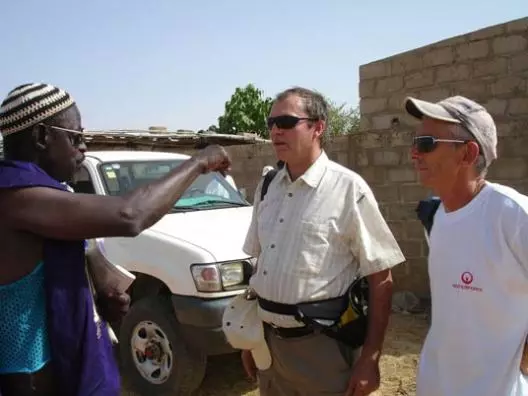
« Quand vous savez qu'un élu fait quelques milliers de kilomètres pour voir où en est le projet que sa collectivité soutient, vous faites en sorte que ça avance ! »
Jean-Marc Loubet, technicien à Veolia Toulouse, est parti sur plusieurs projets de coopération décentralisée : le Paddy au Mali et Bangangté au Cameroun.
Quand avez-vous entendu parler de coopération décentralisée pour la première fois ?
Dès mes premiers contacts avec la fondation Veolia. En 2005, je suis parti en Indonésie dans le cadre d'une mission d'urgence donc sans rapport a priori avec ce mécanisme d'aide. C'est au gré de discussions avec les permanents de la Fondation que j'ai eu vent de ce dispositif particulier. Or il se trouve qu'à côté de mon activité professionnelle, je suis élu dans la commune d'Aucamville, en Haute-Garonne, et c'est donc à un double titre que le sujet m'intéressait : en tant que volontaire Veoliaforce et en tant que conseiller municipal. J'ai fait des recherches pour me familiariser avec le mécanisme et puis au Cameroun, où je suis parti en 2007, j'ai compris le rôle du Syndicat des eaux d'Ile-de-France (Sedif) qui soutenait déjà le programme de rénovation du réseau d'adduction et qui a été précurseur sur le sujet. Bref, tout me conduisait à la coopération décentralisée !
Après avoir suivi la formation des volontaires Veoliaforce en 2006, vous êtes parti régulièrement pour le compte de la fondation Veolia dans le cadre de coopérations décentralisées. Ce mode particulier d'aide est-il ressenti différemment sur le terrain ?
Au Mali où j'ai passé quelques semaines en 2009 sur le Programme d'appui au développement durable de Yélimané (Paddy), j'ai bien ressenti la différence. L'implication de collectivités locales françaises entraîne la visite régulière de leurs représentants sur le terrain et leurs homologues maliens sont d'autant plus mobilisés. Quand vous savez qu'un élu fait quelques milliers de kilomètres pour voir où en est le projet que sa collectivité soutient, vous faites en sorte que ça avance !
Qu'apporte la présence d'une Fondation d'entreprise au coeur d'une coopération décentralisée ?
De ce que j'en ai vécu sur place, la fondation Veolia apporte une vraie expertise du terrain. Et c'est important. Qu'il s'agisse des permanents de la Fondation ou des volontaires comme moi, l'expérience sur ce type de projet est essentielle. Elle permet de s'inscrire sur le long terme, de traiter la partie technique sans oublier la transmission des savoir-faire.
C'est tout le sens du mécénat de compétences apporté par la Fondation et cela n'est possible que grâce à nos collègues qui, en France, suppléent notre absence pendant nos missions. Et puis entre deux visites d'élus, pour les populations aidées, nous sommes le visage de la coopération décentralisée.
EN SAVOIR PLUS SUR LE PROJET SOUTENU
> Paddy (Programme d'appui au développement de Yélimané)
Programme d'alimentation en eau dans le cercle de Yélimané.
Paul Hoeferlin: "It was the first time I'd worked with the Red Cross."
"It's so satisfying to know that you are helping others, to know that training local technicians means that people in Kadoma will be supplied with good quality water."
Paul Hoeferlin, an engineer at Veolia Water Solutions & Technologies, was in Zimbabwe from July 9 to 26 to provide support for the French Red Cross, one of the Foundation's partners. He was stationed in Kadoma, a city with a population of 100,000 in the center of the country, where he took over from Patrice Darré, who went out in September 2009 to identify and prioritize the work to be done at the water treatment plants.
Between 2008 and 2009, a number of volunteers took turns working on the ground to halt the cholera epidemic that had been ravaging Zimbabwe. Now that the epidemic is under control, what were your objectives when you got there in the summer?
My job was to evaluate the performance of the two water treatment plants supplying the city of Kadoma: the quality of the water entering and leaving the plant and the operation of the control and treatment equipment. After the epidemic, the Red Cross had done some work on rehabilitating the plants and wanted an expert to check it. The idea was to also come up with recommendations for preventing future cholera outbreaks in the country.
And it was in connection with this preventive work that you trained local technicians ?
Yes. At the request of the Red Cross, we trained the teams at the Kadoma plants. When everything is running smoothly, the technicians know how to run the water plant. But things get tricky when the water quality changes, seasonally or after a big storm, for example... Therefore, we explained to them in detail about how the filters and everything else worked so that the water supply would not be interrupted because of a slight technical problem.
What was your relationship with the Red Cross and local teams like?
It was the first time I'd worked with the Red Cross, and it was a fantastic experience, and the Zimbabweans I met were very welcoming.
This was your first assignment as a Veoliaforce volunteer. What were you expecting?
I had no idea what to expect, particularly since it was the first time I had ever been to Africa. As it turned out, I discovered a magnificent country! And it's so satisfying to know that you are helping others, to know that training local technicians means that people in Kadoma will be supplied with good quality water.
So, would you be prepared to go off on another assignment?
Yes, definitely! It's not up to me, but Veoliaforce just has to ask and I would be delighted to help!
LEARN MORE ON THE PROJECT SUPPORTED
> Zimbabwe, 2009
In late 2008, the terrible cholera epidemic which ravaged Zimbabwe for several months affected 85,000 people, with 4,000 deaths and, in some places, a mortality rate of over 25%.
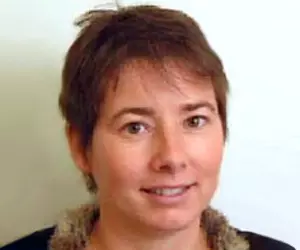
Laurence Miller, sponsor and volunteer at the Fondation
« Professionally, this kind of work is very rewarding and enriching. »
Laurence Miller legal advisor on environmental law at the head office of Veolia, is a Foundation sponsor and volunteer. It is in the second capacity that she has been providing legal assistance over the past few weeks for the Ares organization with help from the legal and tax departments of Veolia.
You have been working for Veolia for 11 years, and after sponsoring a project, you're now a Veoliaforce volunteer. How did you learn about the Veolia Foundation's work?
In 1999, when I started working at Sarp Industries, the company's hazardous waste treatment subsidiary, I found out about the Foundation's program and applied to be a sponsor. Less than two years later, I was asked to sponsor a project in workforce integration through street theater (in the 18th arrondissement of Paris). The experience lasted a year, from preparing the project study to monitoring it.
Now you've gone further with another type of aid because, since the fall, you have been providing legal assistance for the Ares organization. What led up to this partnership?
I had done an internship at Ares when I was at law school. The organization, which has been in existence for 20 years, takes on 350 people a year in its workforce integration program, with 90 permanent employees providing support. Ares was created to help people with serious social problems, mainly the homeless, enter the workforce by offering them an 18-month contract leading to a permanent job in a network of partner companies, of which Veolia is one.
A few months ago, the organization contacted me for a legal audit of its activities. I was, of course, very happy to be able to help them as much as I could. But besides my personal commitment, I had to find the time and technical resources to give them the best help possible. So I contacted the Veolia Environnement Foundation, which encouraged me to speak to my superior about offering this new type of assistance. The project was favorably, even enthusiastically, received by the head of the Legal Department, Eric Haza, as well as by the VE SA Director of Human Resources, Sylvie Bailly, and the Tax Director, Béatrice Deshayes. So we all got involved together!
This transfer of legal skills is a first for the Veolia Foundation. Can you explain in concrete terms how legal assistance is provided to an organization like Ares?
Following four years of strong growth in its activities, Ares feels the need to improve its organization, especially when it comes to legal matters. The help they need involves all sorts of questions that are beyond my expertise. The idea is to be able to call in the right person to deal with the question, whether it be about commercial contracts, company law, labor law or tax law. By being the contact person for Ares at Veolia, I take all questions and speak to the most qualified people in order to come up with the answers. By the same token, I deal with just one person at Ares, and that is its administrative and financial director, Audrey Mougenot.
How much time does this assistance take?
According to the timetable we have set up for the rest of the year, it will probably take one day a month. But we don't have very much experience with this type of philanthropy and it could end up being very time- consuming. We'll learn as we go. But, professionally, this kind of work is very rewarding and enriching. Ares dels closely with public authorities and its concerns are not that different from those of a public services provider like Veolia.
LEARN MORE ABOUT THE PROJECT SUPPORTED
> Ares - Services Paris
Assistance for development of the Paris structure for economic integration of homeless people.
Guillaume Courtin: "To transmit our knowhow so that tomorrow."
"We don't mean to act indefinitely in place of the inhabitants, but generally to transmit our knowhow so that tomorrow, Dschang can manage collection all by itself, with sufficient human and material resources."
An engineer at CREED (Research Centre on Environmental Services) in Limay, Guillaume Courtin is a specialist in waste management. His work covers waste treatment by landfilling and composting as well as methanation. With a focus on new solutions to recover the gas. During his previous studies, he met Blaise Metangmo, the president and founder of the nonprofit association Elans (Ensemble pour l'Action Nord Sud). They were both convinced of the crucial importance of waste management in the developing countries. So it was perfectly natural for Guillaume Courtin to suggest to the Veolia Environnement Foundation that he sponsor the project that they are developing together at Dschang, in Cameroon.
What got you interested in the question of waste?
In the early 2000s, I had just finished a Master's Degree in Management Sciences (MSG) at University of Paris-Dauphine and was setting off to work as an international volunteer at the Government Accounting Office in Senegal. I was living in a small village not far from Dakar, and I was immediately struck by the problematic issue of waste. In this village, it was just dumped into the sea!For me, that was a real shock.
After returning to France, I registered with ENGEES (National School of Water and Environmental Engineering in Strasbourg) to take specialized Master's Degree in "Waste Management, Treatment and Upgrading".
What made you decide to settle for Dschang, in Cameroon?
For one thing, a very simple reason: Blaise Metangmo, the founder of the nonprofit association Elans, whom I met at ENGEES, is a native of the town. Plus, it's an urban municipality that adds several specificities with regard to waste treatment.It is in fact located at an altitude of 1500 m:the climate there is very pleasant. The temperature never drops below 19° C and never goes higher than 25° C. However, the town is built on the hillsides: many streets are extremely steep. The capital of the Region of Menoua, in Western in Cameroon, it has six districts and more than 80,000 inhabitants.
There are large numbers of farmers in the environs:at these latitudes and these altitudes, just about everything grows! And Dschang is famous in West Africa for its university and for the FASA (Faculty of Agronomics and Agricultural Sciences): about 15,000 students live there and stimulate the local dynamism.
On the whole, while waste collection may appear to be more complicated here than in certain towns on the flatlands, Dschang has all the opportunities necessary to remedy this difficulty within reach. We can set up permanent solutions here.
What is the Elans project?
Because of the relief, conventional urban collection from garbage trucks is impossible in more than half of the town.We're therefore going to set up a pre-collection system at the homes, probably relying on motorized delivery tricycles.Our aim is to rid the town of all its illegal dumps. To do this, we have to educate the population and make them stakeholders in this indispensable cleanup. We plan to set up educational and entertaining projects (for example "clean neighborhood" contests) to intensify their participation.
The other major challenge is to reduce the quantity of waste collected.Thanks to a waste characterization campaign, we know that 80% of it is organic: so we will train the families in home composting. They are all cousins, brothers or aunts settled as farmers in the countryside, for whom this organic soil improver will be very useful. There are also farm cooperatives which can recover the compost: everything is close at hand to organize a circuit that can function!
We also plan to set up training programs for the personnel of the Urban Community of Dschang. With experts from Veolia Environmental Services, who will take part by volunteering their skills, we will help them safeguard their brand new municipal landfill as well as the entire collection chain. We don't mean to act indefinitely in place of the inhabitants, but generally to transmit our knowhow so that tomorrow, Dschang can manage collection all by itself, with sufficient human and material resources.
This is the prerequisite for correctly addressing the issue of waste in the developing countries.
LEARN MORE ABOUT THE PROJECT SUPPORTED
> Elans (Ensemble pour l'action Nord Sud)
Creation of a complete waste management program in the urban community of Dschang.
Philippe Deparday: "There's so much poverty in these camps that you inevitably want to help."
"There's so much poverty in these camps that you inevitably want to help."
40 km south of Beirut, on the outskirts of the Lebanese city of Saida, lies one of the largest Palestinian refugee camps: Ein El Hilweh. 45,000 people have been living there for years. But as the Israeli-Palestinian conflict drags on, and the influx of refugees continues, other camps have sprung up around this official camp, which has been built "on solid ground" and equipped with infrastructure.
In these informal settlements, living conditions are far from satisfactory, in terms of housing quality, infrastructure and sanitation.
Mission: to help the NGO Première Urgence
To make up for these many shortcomings, the NGO Première Urgence has been working since March 2005 in one of them, Sikke, which is home to 368 families, or 1,712 people. The main objective is to eliminate the environmental and health risks associated with the uncontrolled discharge of hundreds of cubic meters of wastewater. To achieve this, the NGO relies on the expertise of Lebanese and international professionals.
Philippe Deparday, center manager at SADE DRIF Sud, was assigned by Veoliaforce to help the NGO Première Urgence. He spent a week in South Lebanon in February 2008 to validate some of the choices that had been made for the future wastewater network. He was able to verify on site the data he had previously received (housing layout, topography, access for construction machinery, road conditions, existing networks, etc.), update the preliminary designs for the future sewerage and stormwater networks, and work with the local design office.