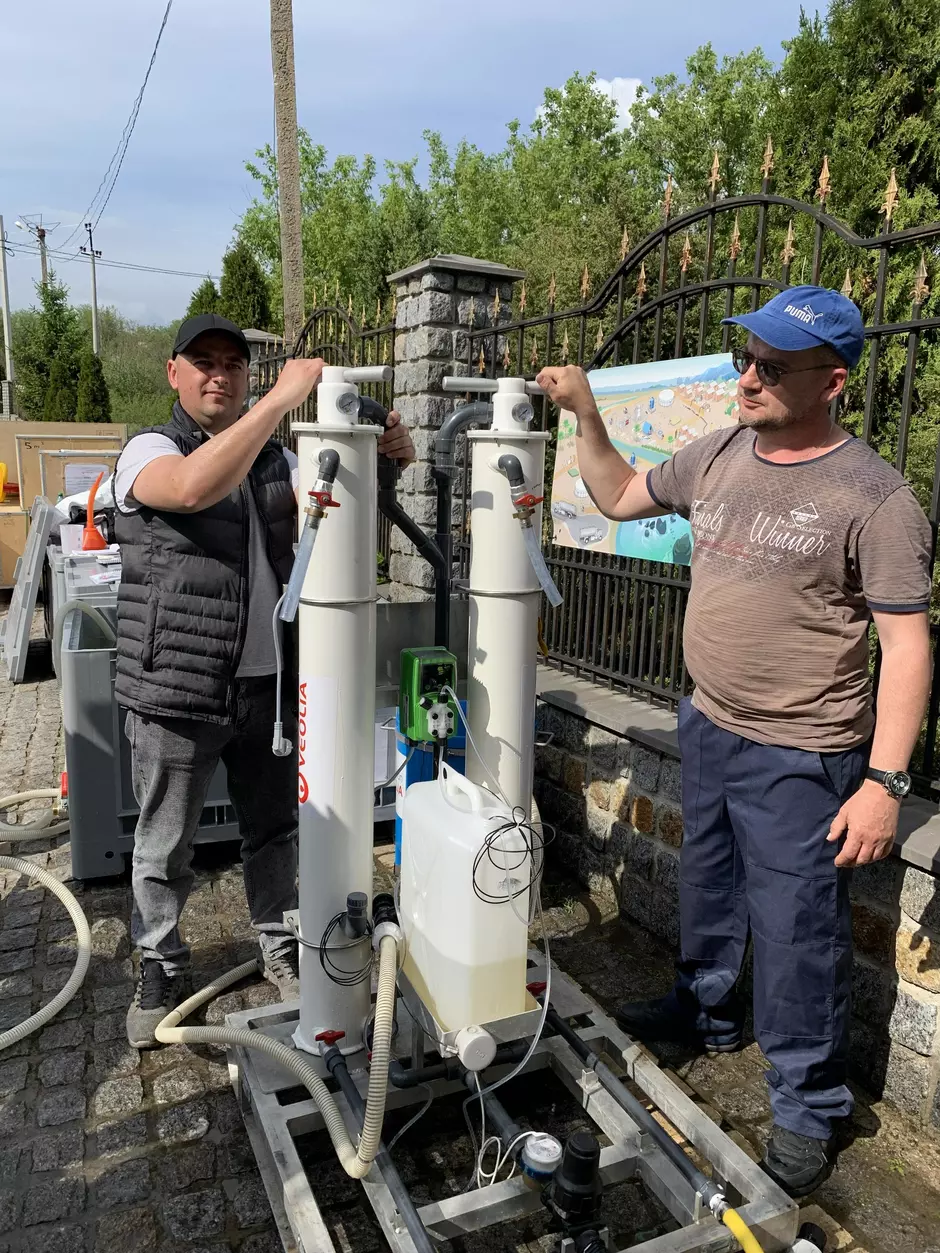
Angela Currie and Julien de Sousa traveled to a country at war for a Veoliaforce mission focused on drinking water production. In Mykolaïv, Ukraine, they trained Ukrainian water technicians to deploy Aquaforces, the Veolia Foundation’s mobile water treatment units.
Angela comes from the United States, while Julien is based in France. Together, they spent 12 days in Ukraine on a mission designed to enable drinking water production in highly constrained environments. What does that mean in practice? Angela Currie and Julien de Sousa are Veoliaforce volunteers for the Veolia Foundation: with their management's approval, they dedicate their skills and energy to humanitarian partners. When they received the call for a mission in Ukraine, neither hesitated.
A mission focused on equipment and training
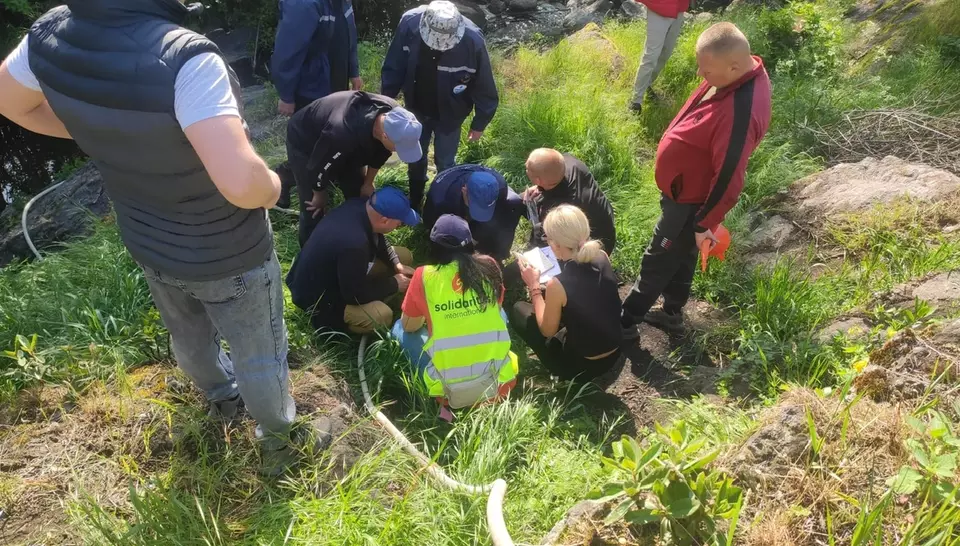
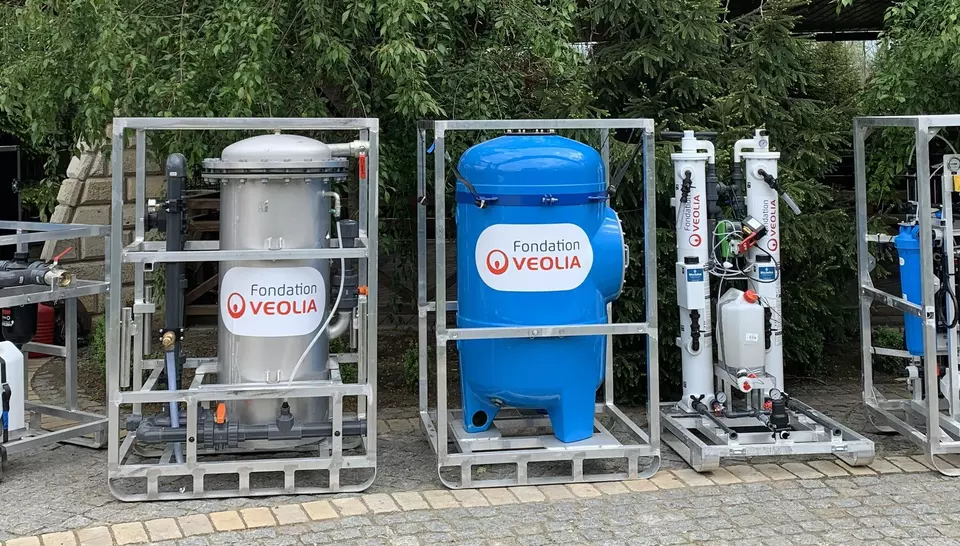
What was the purpose? The mission centered on the Veolia Foundation’s mobile water treatment units, the Aquaforces. Three years ago, Solidarités International with the support of the French Crisis and Support Centre of the Ministry of Europe and Foreign Affairs, facilitated the donation of five such units to local Ukrainian organisations and institutions. Some of these now required maintenance (repacking, replacing seals and dosing pumps, and water-testing the machines).
The other part of the mission involved training water technicians to operate and run an Aquaforce 7500 unit as well as an Aquaforce RO (Reverse Osmosis), a model vital for addressing local challenges.
Experienced trainees
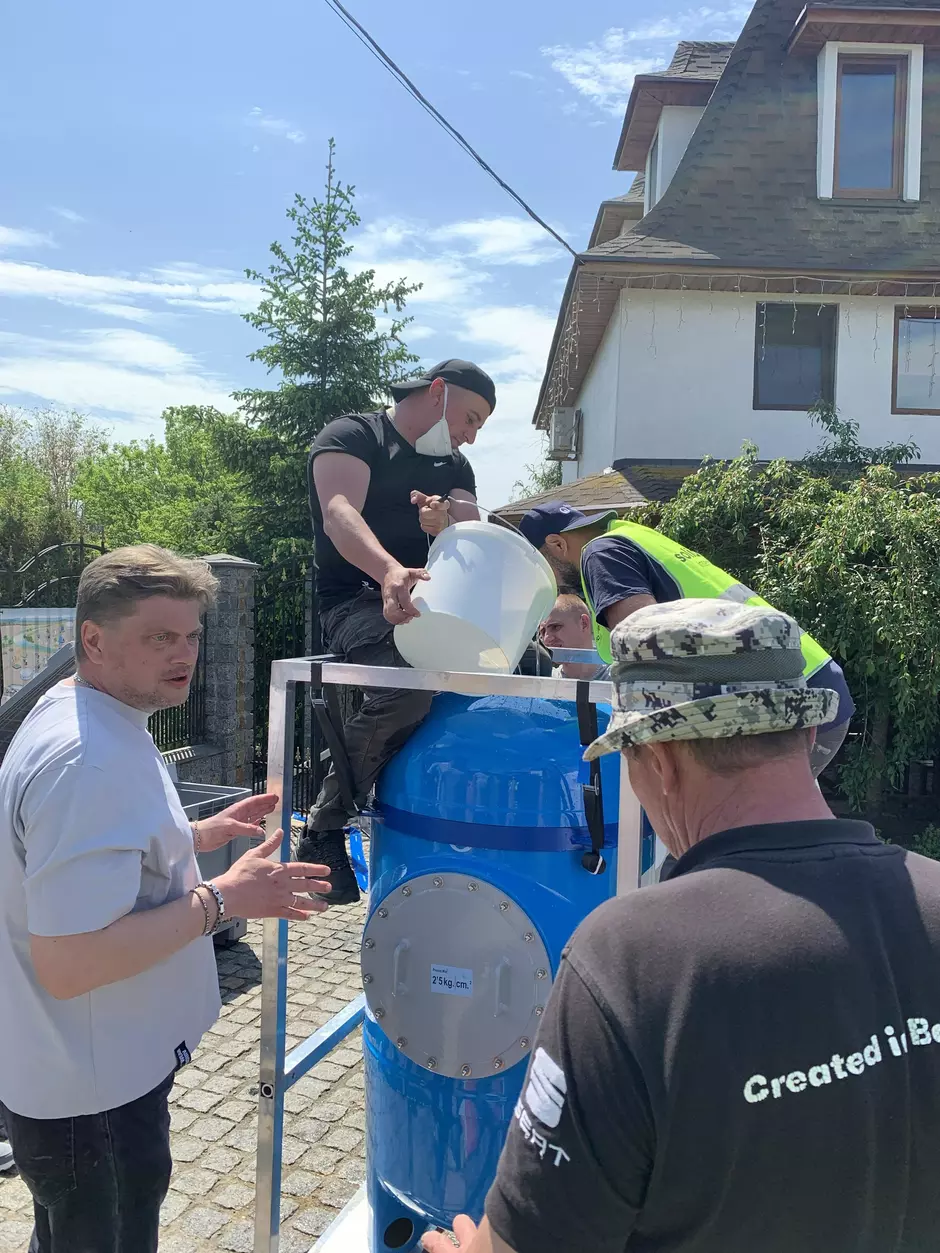
The training took place over five days with a group of professionals from Ukrainian public water utilities."Our counterparts were highly experienced," recalls Angela Currie. "They already worked in water services, so we were able to quickly bypass basic water chemistry and spend our time actually operating the Aquaforces. And they quickly recognized the major benefit of these mobile drinking water treatment units.
The workshops progressed in intensity, alternating each day between the Aquaforce 2000, the massive Aquaforce 7500, and the Aquaforce RO. This equipment directly solves a critical problem when dealing with brackish water tables, especially near Mykolaiv.
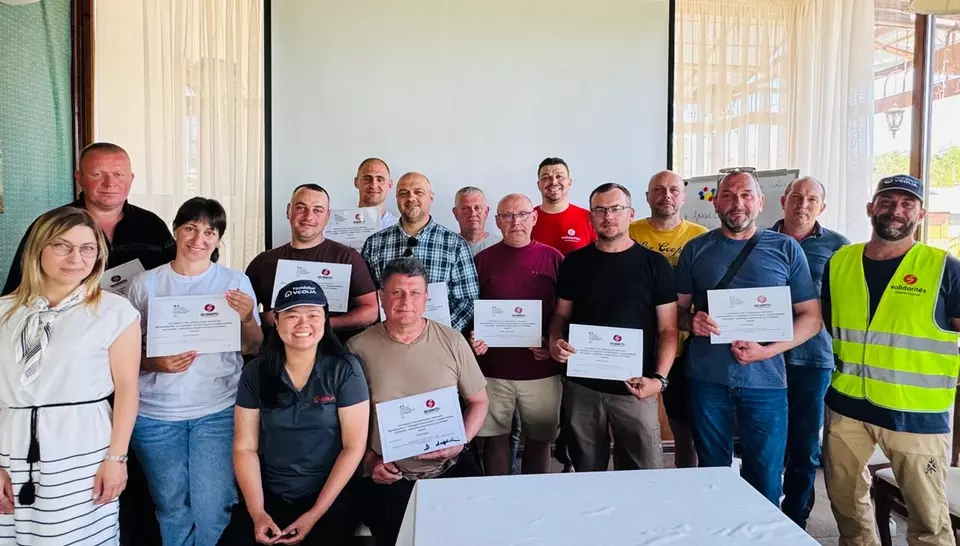
The unique context of a country at war
Reaching the training site required compliance with a strict security protocol, as access through Kyiv was prohibited.
"The journey to the site was quite wild," smiles Angela Currie. "From my home, I took a plane, a subway, and a bus. A driver brought us to one of the open crossing points on the Moldovan-Ukrainian border, we crossed the border on foot, and another driver picked us up on the other side. It felt almost like a scene from a movie!"
Once there, the two volunteers lived to the rhythm of alarms ringing on their mobile phones via the Air Alarm app.
"The first night, you don't sleep much. After 4 or 5 days, you get used to it," notes Julien de Sousa.
To minimize risks, Solidarités International had selected a host site far from the front lines and potential targets like power plants, factories, or military sites. Accommodation and the training facility were located at the exact same spot, which included a secure basement shelter. One driver remained available 24/7 in case of an emergency evacuation.
"What strikes you isn't physical destruction, which isn't always very visible, but the war memorials we saw in every town we passed through. They are covered in flowers, and the faces of the latest soldiers killed in combat are posted on them," shares Julien.
For Angela, it is the personal stories that linger in the memory.
"The most moving part was listening to the Ukrainians, hearing their personal stories, and sensing the invisible impact of the war and the post-traumatic stress affecting families," she confides.
At the end of the mission, the trainees returned to their respective utilities to test and prepare future deployment sites. As for the overhauled Aquaforce units, they were scheduled to be sent directly to the front lines to provide vital drinking water to civilian populations and emergency services.