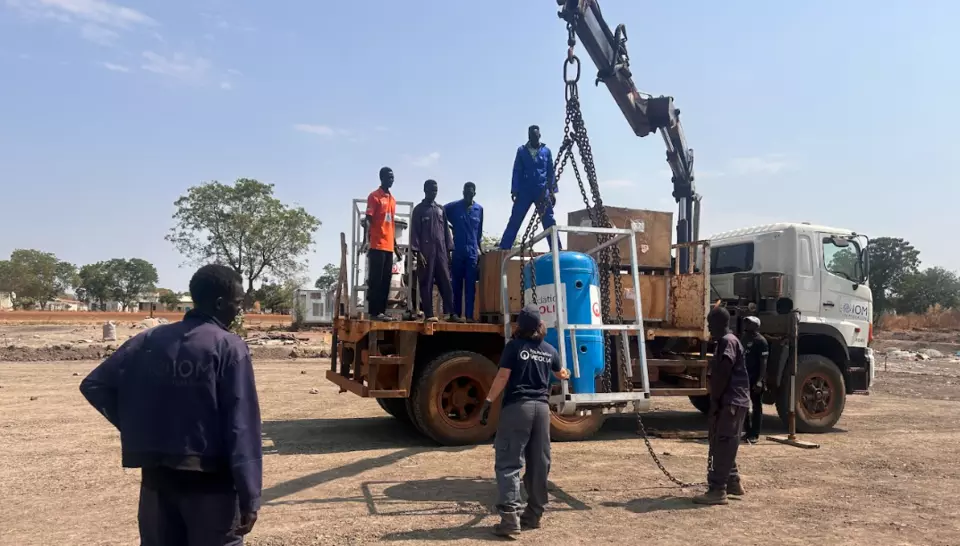
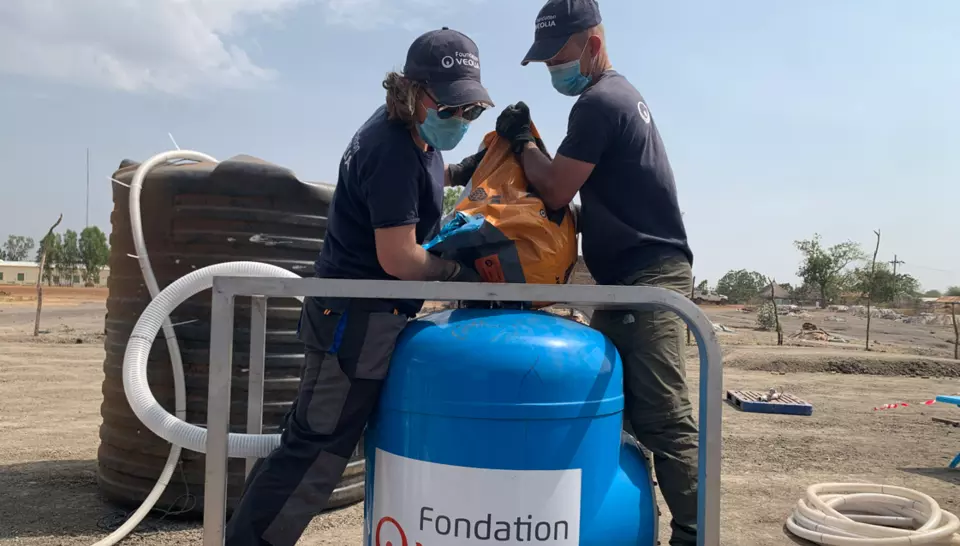
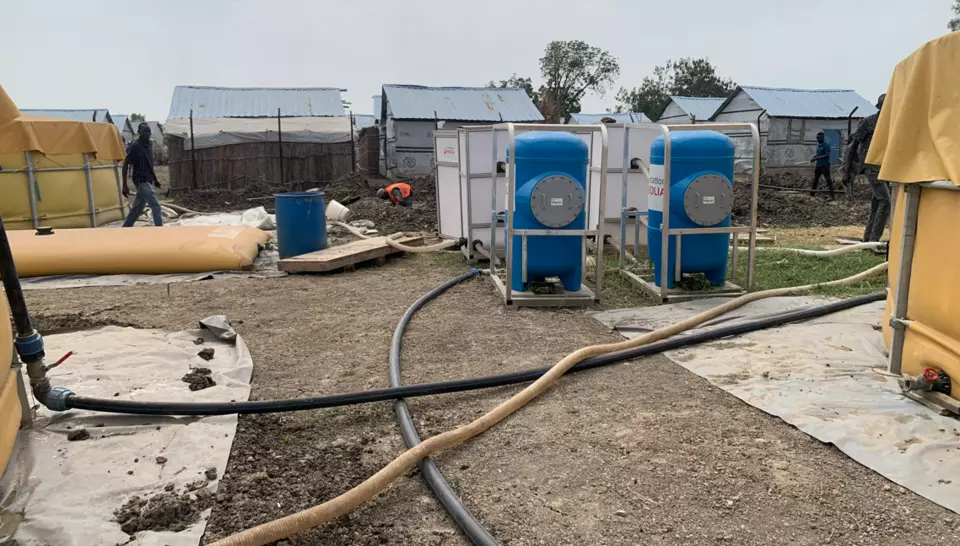
In South Sudan, the Veolia Foundation has deployed water access equipment and mobilized Veoliaforce experts to support the International Organization for Migration (IOM – UN Migration) in the face of an unprecedented humanitarian crisis. This response combines heavy equipment with high-level expertise to audit, optimize, and sustain water access.
Since April 2023, Sudan has been gripped by armed conflict across its entire territory. The conflict between the Sudanese Armed Forces (SAF) and the Rapid Support Forces (RSF) has triggered unprecedented population movements. More than 12 million people have been forced to flee their homes, and by mid-2025, an estimated 1.2 million people had entered South Sudan.
Among the key actors on the ground, the International Organization for Migration (IOM) manages water access for several displacement sites. The agency must contend with a growing number of displaced individuals and a cholera epidemic that has affected the country since autumn 2024.
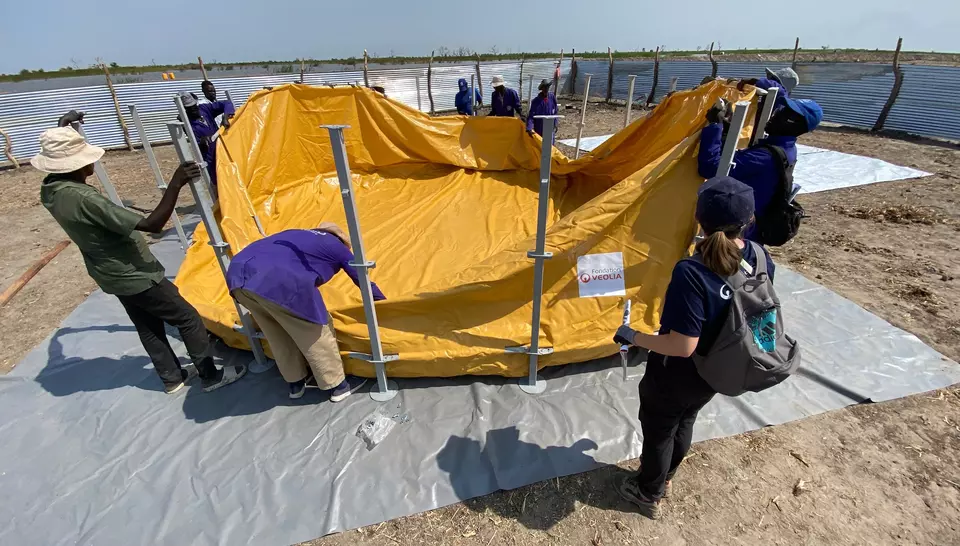
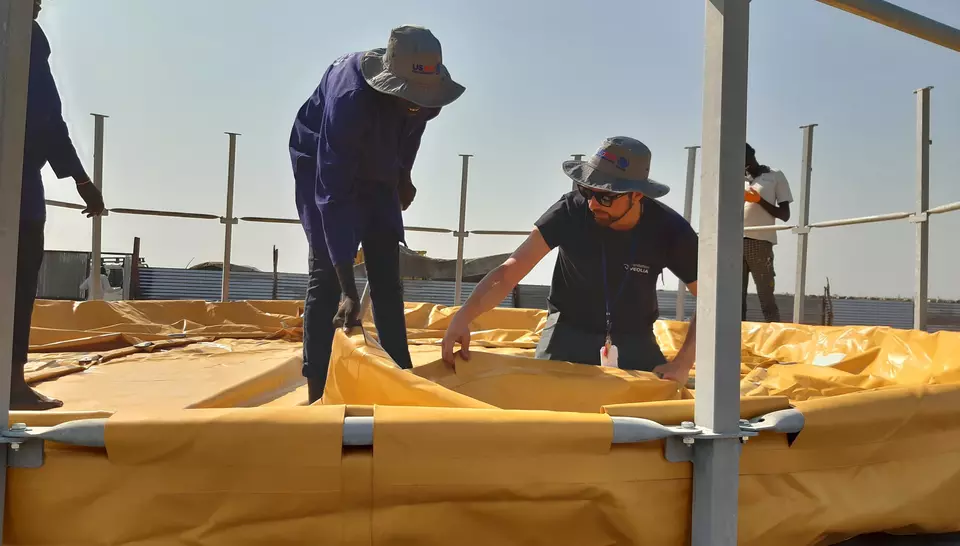
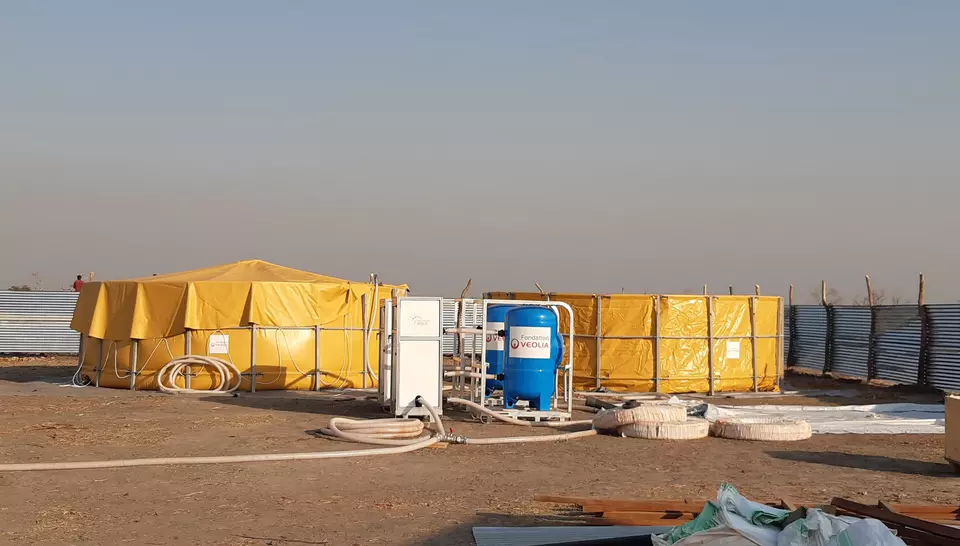
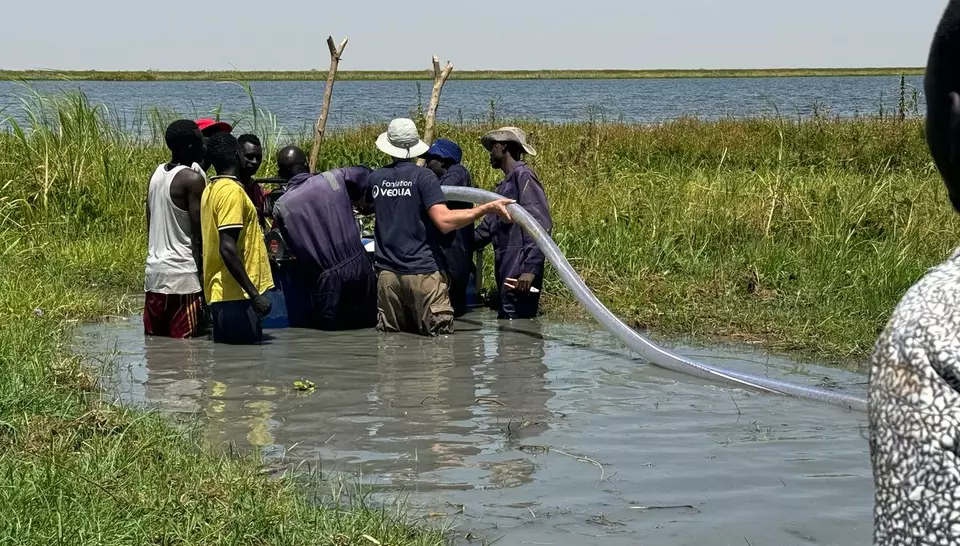
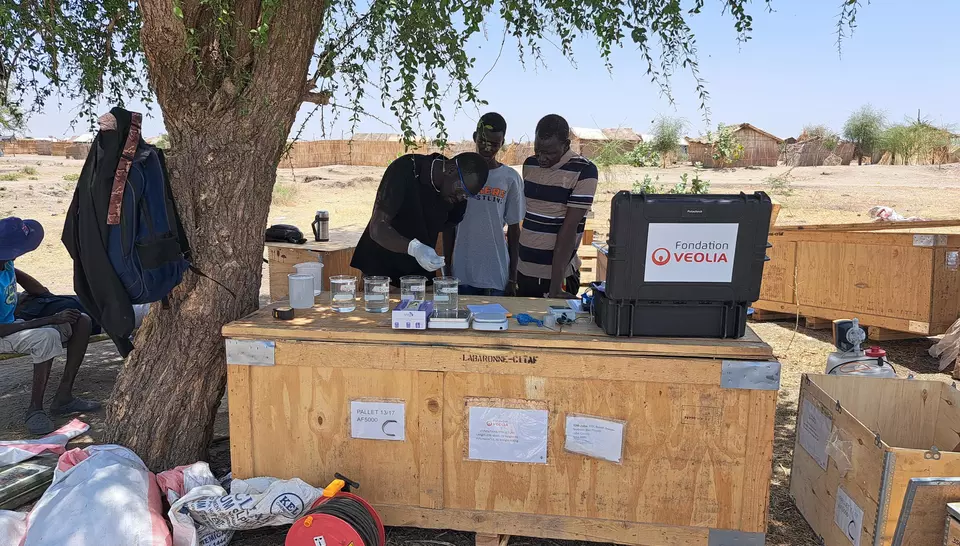
In this context, the Veolia Foundation – an IOM partner since April 2024 – was called upon for its expertise in humanitarian water access. The response was carried out in two phases.
Phase 1: Deployment of water treatment units & audits
Eight Veoliaforce experts were mobilized in the spring of 2025 to deploy Aquaforce 5000 units (each designed to meet the needs of 5,000 people) and to audit existing water production facilities.
Bentiu Camp: Hosting over 100,000 displaced individuals in the north of the country, Diane Vuillaume (Water Design & Projects, Veolia East France) and Roger Maendel (Water Technologies, USA) spent two weeks deploying an Aquaforce 5000 and training local staff to ensure operational continuity.
Malakal: Camille Ferré (Technical Design Engineer, Franciliane) and David Renard (Project Manager, Water Technologies, France) deployed another Aquaforce 5000. Their mission included specific recommendations for the rainy season, such as the use of sandbags, protective roofing, and the implementation of jar tests.
Renk: At the Joda border in the northeast, Thomas Schwartz (Veoliaforce volunteer from Franciliane) oversaw the commissioning of an Aquaforce 5000 to provide water for returnees in transit.
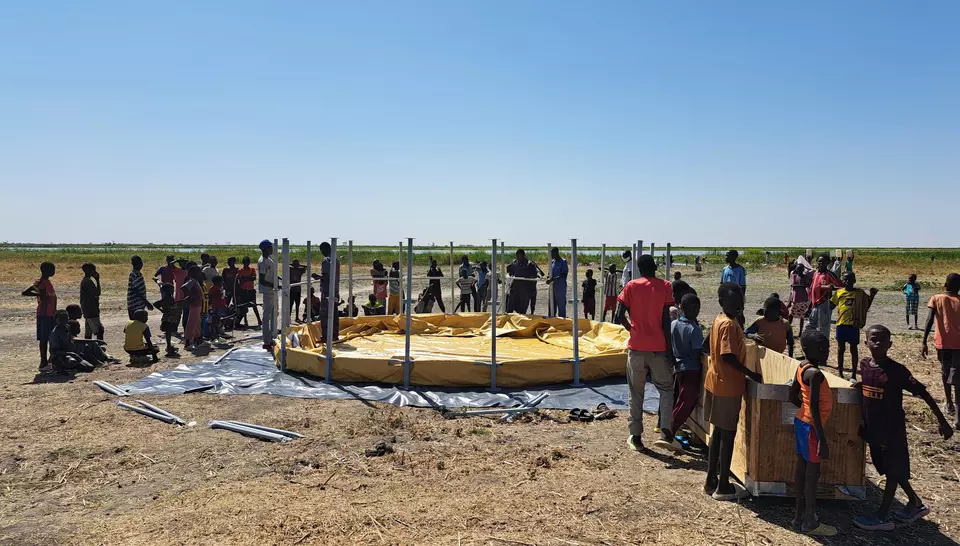
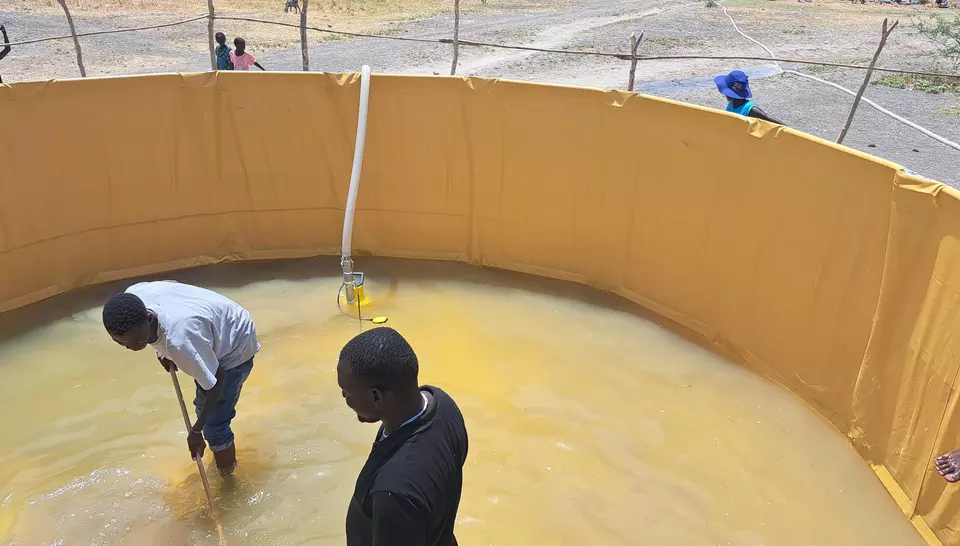
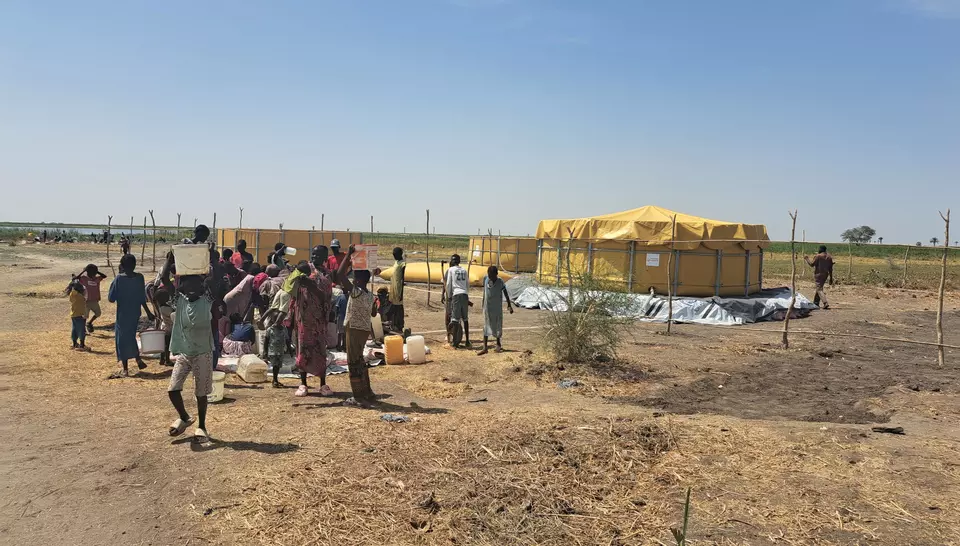
These deployments – including equipment donated by the Veolia Foundation to IOM – were accompanied by a meticulous audit of existing installations. Pierre Rousseau provided technical reviews of water production infrastructure during his two weeks on the ground. Supported remotely by Astrid Milhes (Veolia Water Technologies), he proposed efficiency improvements for IOM's water production.
Phase 2: Solarization & limiting reliance on aluminum sulfate
In December 2025, five additional Veoliaforce water experts were deployed. In Bentiu, Julien de Sousa, Guillaume Verhaeghe, and Adam Testagrossa formed a specialized trio, while Muriel Schuller and Thomas Fougnié operated at the Malakal site.
Three Aquaforce 7500 units were deployed with a priority objective: replacing aluminum sulfate – a costly, polluting chemical that is difficult to source locally – with ultrafiltration. This technological shift significantly reduces maintenance costs and operational dependency by providing:
High-quality water to mitigate cholera risks;
Service continuity independent of supply chains;
Environmental protection for aquatic environments and soils against the risk of aluminum sulfate polluting water if mismanaged.
Read on IOM's website : "Redefining Water Treatment in South Sudan"
The mission also focused on the solarization of the water production units. With remote support from Pierre Rousseau, 110 days of skills-based sponsorship were delivered in December, following 102 days in the spring.
Phase3: Train local staff
In March 2026, to ensure the sustainability of the water access provided by the deployed installations, three Veoliaforce volunteers were mobilized: Adam Testagrossa, from the North American teams, came back to South Sudan, like Roger Maendel, followed by Quentin Lelardeux, from the Water Tech expertise. For more than two weeks, they trained local operators to ensure the continued operation of the equipment. The objective is clear: to keep the water flowing.
This mobilization reflects the scale of the challenge: enabling IOM to provide sustainable water access for the populations it serves.
Key Figures
6 units deployed: 3 Aquaforce 5000 + 3 Aquaforce 7500
13 Veoliaforce volunteers mobilized
266 man-days of skills-based sponsorship